

Healthcare employers are investing in the next generation of workers through internships, clinical placements, job shadowing, apprenticeships, tuition assistance, and partnerships with K-12 schools, community colleges, and universities across Washington.
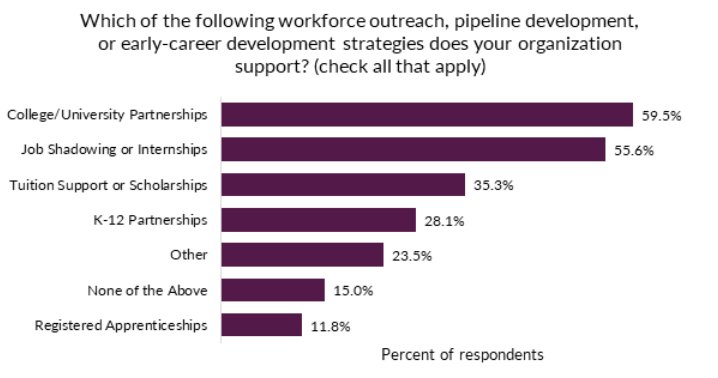
Recent Sentinel Network survey responses highlight “grow-your-own” workforce strategies used by WA’s employers to create pathways into high-demand healthcare occupations. Partnerships with colleges and universities were among the most reported workforce development strategies, while apprenticeships were reported less frequently.
Benefits of Investing in Grow-Your-Own Strategies
Employers most frequently described workforce development strategies targeting nurses, medical assistants, behavioral health professionals, dental assistants, and substance use disorder professionals. Several organizations noted that internships, clinical rotations, and training programs have become important recruitment tools, with many participants ultimately joining their workforce after completing their education.
“We have started a CNA program for our own staff including bridge courses for HCA and MA. We also co-sponsor a high school CNA program.” – Assisted living facility respondent
“The partnership with Master’s program remains strong and is the biggest source of our new workforce.” – Behavioral health agency respondent
Many respondents also emphasized the value of advancing incumbent workers. Career ladders, apprenticeships, tuition support, and professional development opportunities were commonly cited as strategies for strengthening retention, supporting skill development, and creating pathways into higher-skilled healthcare roles.
“Training nursing assistants. Supporting growth from NAC [Nursing Assistant Certified] to LPN to RN [is beneficial].” – Long-term care employer respondent
Rural and Sector-Specific Strategies
Rural organizations frequently highlighted partnerships with local schools, colleges, and training programs to develop local talent and strengthen workforce retention in their communities.
Workforce development approaches varied somewhat by sector.
- Hospitals, community health centers, and rural health clinics described using the broadest range of workforce development activities, including clinical placements, apprenticeships, scholarships, residencies, and educational partnerships.
- Behavioral health organizations frequently relied on graduate internships and practicum placements as workforce development approaches to recruit counselors, social workers, and psychiatric providers.
- Long-term care organizations often focused on NAC training and nursing career ladders as workforce development approaches to support entry and advancement within the workforce.
- Dental practices highlighted internships and job shadowing as workforce development approaches that provided pathways into dental assisting and dental hygiene careers.
Challenges and Next Steps
While many employers acknowledged the benefits of these strategies, organizations that were not engaged in workforce development activities most often cited limited staff capacity, time, and resources rather than a lack of interest as reasons for not implementing these programs.
“[We’re] still rebuilding the internship program with a local university after COVID. Also, we don’t have a staff member who can devote a significant portion of their time towards developing and administering the intern program.” – Public health organization
These findings underscore that addressing workforce shortages requires more than recruitment alone. Investments in education partnerships, career pathways, and other workforce development continue to play an important role in building the healthcare workforce of the future.
